
Modernizing Loyalty Programs: From Punch Cards to Push Notifications
Simple loyalty programs drive repeat business like nothing else. Here's how digital wallet passes transform the humble punch card into a powerful engagement tool.
 Pushcard Product Team•Jan 18, 2026
The humble punch card has driven billions in repeat business. Now imagine if it lived on every customer’s phone and could talk back.
The Enduring Power of Simple Loyalty Programs
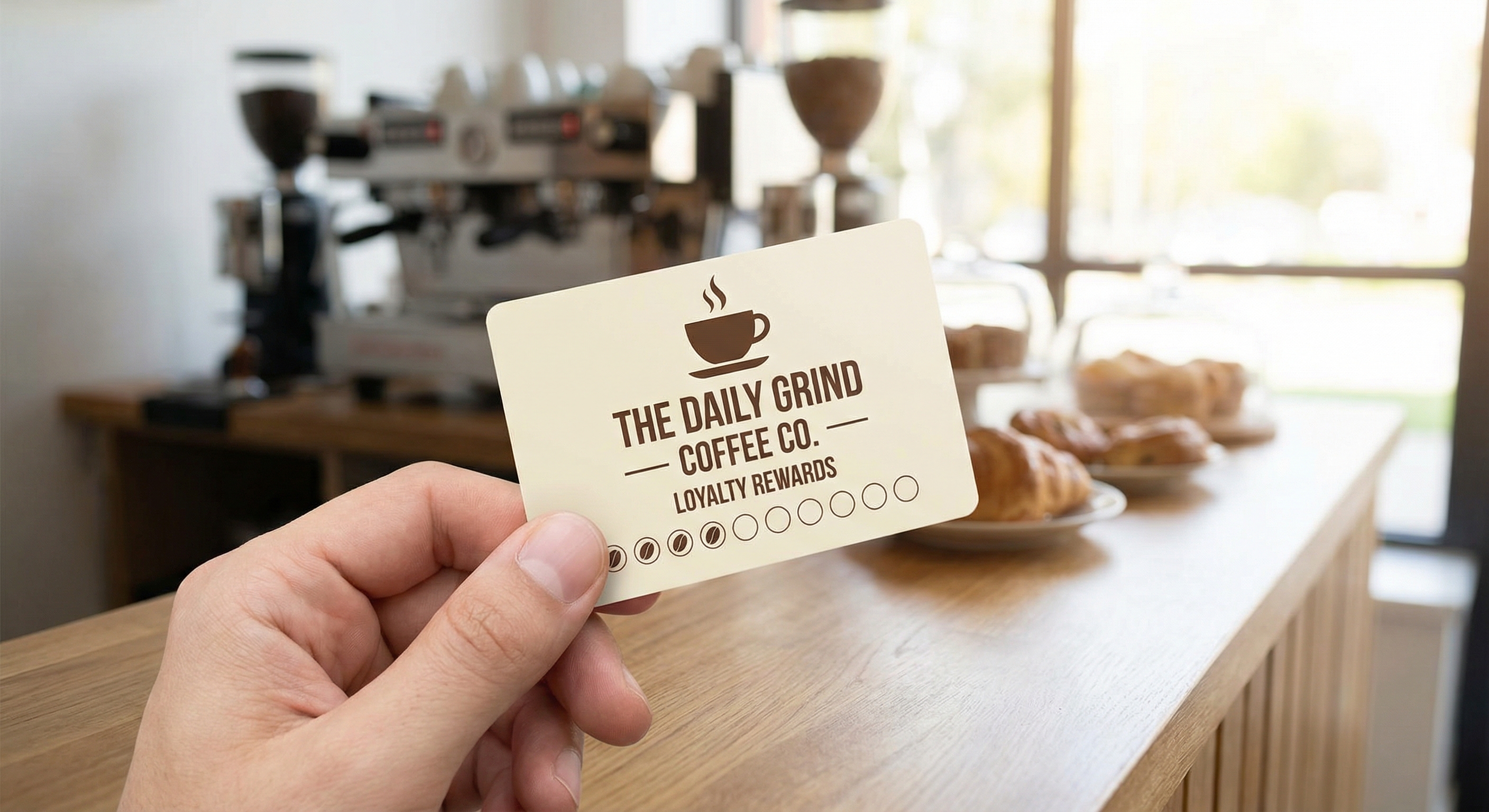
Walk into almost any local coffee shop, sandwich shop, or car wash, and you’ll see it—the loyalty punch card. “Buy 10, get 1 free.” Simple. Proven. Effective.
Despite the explosion of sophisticated CRM systems, mobile apps, and AI-powered personalization engines, basic loyalty programs remain one of the most cost-effective customer retention tools ever invented. The reason? They tap into fundamental human psychology:
- Progress visualization: Customers see themselves advancing toward a reward
- Loss aversion: Partially completed cards create investment and prevent switching
- Guaranteed value: Clear, tangible benefit for repeat business
- Simplicity: No complexity, no learning curve, instant understanding
Studies consistently show that even the simplest loyalty programs increase customer retention by 27-85% and boost average transaction values by 10-30%. Not bad for a piece of cardstock with a few holes punched in it.
Why Loyalty Programs Work
The effectiveness of loyalty programs isn’t mysterious—it’s rooted in well-documented behavioral economics:
The Endowed Progress Effect
Research by Nunes & Drèze demonstrated that giving customers a head start on a loyalty program dramatically increases completion rates. In their famous study, customers given a 12-stamp card with 2 pre-stamped slots completed it faster and at higher rates than those given a 10-stamp card starting from zero—even though both required 10 purchases.
The lesson: perceived progress drives action. When customers feel they’re already on their way to a reward, they’re more motivated to continue.
Psychological Commitment
The Zeigarnik Effect explains why partially completed tasks stick in our minds. An incomplete punch card creates a low-level psychological tension—“I’m 7 out of 10 toward a free coffee”—that keeps your business top-of-mind.
This is why customers with loyalty cards visit 20-35% more frequently than those without.
Reciprocity Principle
When businesses offer rewards programs, customers feel the business is investing in the relationship. This triggers reciprocity—the deep-seated human instinct to return favors. A loyalty program transforms a transactional relationship into a mutual exchange.
Switching Costs
Once a customer has 6 stamps on your punch card, they’re unlikely to start fresh at a competitor. The sunk cost fallacy works in your favor—they don’t want to “waste” their progress.
The Impact on Business Metrics
Loyalty programs drive measurable business outcomes:
Increased Visit Frequency
- Customers with loyalty cards visit 2-3x more frequently
- Average purchase frequency increases 20-40%
- Time between visits decreases significantly
Higher Transaction Values
- Loyalty members spend 12-18% more per transaction
- More likely to add items to reach thresholds
- Premium product adoption increases
Reduced Churn
- Customer retention rates improve 27-85%
- Lifetime value increases by 2-10x
- Acquisition costs amortize over longer customer lifecycles
Word-of-Mouth Marketing
- Loyalty program members are 50%+ more likely to recommend your business
- Referral rates increase as customers evangelize benefits
- Social proof effect when customers visibly use loyalty cards
For a typical small business, a simple loyalty program can generate $50,000-$200,000+ in incremental annual revenue—often with implementation costs under $500.
The Limitations of Physical Punch Cards
Despite their effectiveness, traditional punch cards have significant drawbacks:
Forgotten and Lost Cards
The most common complaint: “I left it at home” or “I lost it.”
- 40-60% of issued punch cards are never fully completed
- Customers forget cards 30-50% of the time
- Lost cards mean lost progress and frustrated customers
- Can’t use the program during impulse visits
This friction directly reduces program effectiveness.
No Communication Channel
Physical cards are passive. Once a customer leaves with their punch card, you have no way to:
- Remind them to return
- Announce special promotions
- Alert them when they’re close to a reward
- Engage them between visits
You’re invisible until they physically return to your location.
Manual Tracking Challenges
- Staff must remember to punch cards (they forget 15-20% of the time)
- Easy to lose track of customer progress
- No data on program usage or effectiveness
- Difficult to modify program terms or rewards
- Punch card fraud (customers adding their own punches)
Limited Space and Information
A physical card can only display static information:
- Reward structure
- Business logo and branding
- Maybe a phone number or address
There’s no room for:
- Current promotions
- Event announcements
- Business hours updates
- Multiple reward tiers
- Personalized messaging
Replacement Hassles
When customers lose cards, staff face awkward situations:
- Do we honor their claim they had 8 stamps?
- Start them over and frustrate them?
- How do we verify past purchases?
There’s no good solution, so businesses often lose customers or give away free products.
No Analytics
Physical cards provide zero data:
- How many customers are actually enrolled?
- What’s the completion rate?
- How does the program affect visit frequency?
- Which customers are most engaged?
- What’s the ROI?
Businesses operate blind, unable to optimize or prove value.
Enter Digital Wallet Passes: Loyalty 2.0
Pushcard transforms the traditional punch card concept by moving it to the one place customers always have with them: their phone.
Always With Them
Unlike physical cards:
- Impossible to forget—their phone is already in their pocket
- Can’t be lost—wallet passes sync across devices
- Always accessible—no searching through wallets or purses
- Available for spontaneous visits—decision to stop in isn’t limited by “Do I have my card?”
This simple benefit—presence—increases program usage by 40-60%.
Real-Time Updates
Digital passes are dynamic, not static:
- Progress updates instantly: Customer sees their new punch count immediately after purchase
- Balance changes reflect live: Loyalty points, rewards, credits update automatically
- Content stays current: Business hours, locations, announcements always accurate
- Seasonal messaging: Holiday hours, special events, new product launches
Customers always see relevant, timely information—not whatever was printed six months ago.
Push Notifications: The Game-Changer
This is where digital loyalty transcends physical punch cards entirely. Push notifications enable:
Reward Progress Updates
“Congrats! You’re now 8/10 toward your free coffee. Just 2 more visits!”
These notifications:
- Reinforce progress and motivate completion
- Remind customers of the program’s value
- Trigger consideration for the next visit
Reward Achievement Alerts
“You’ve earned a free sandwich! Redeem anytime in the next 30 days.”
Creates immediate excitement and drives redemption visits—which often include additional purchases.
Strategic Engagement
- Slow period messaging: “Quiet Tuesday? Get 10% off before 3 PM today!”
- Win-back campaigns: “We miss you! Here’s a special offer to welcome you back.”
- Proximity triggers: “You’re nearby! Stop in for your favorite drink.”
- Event announcements: “Live music tonight starting at 7 PM!”
Birthday and Anniversary Rewards
“Happy birthday from [Business]! Enjoy a free dessert this week.”
Personal touches that deepen relationships—impossible with physical cards since you don’t collect birthdates.
Location-Based Engagement
With customer permission, wallet passes can trigger notifications based on physical location:
- Customer walks past your business → “Welcome back! Your free coffee is waiting.”
- Customer is in your shopping center → “You’re nearby—stop in for your loyalty reward!”
- Customer is in your neighborhood → “Just around the corner! Your punch card is ready.”
This converts proximity into traffic in ways physical cards never could.
Multiple Reward Tiers
Digital passes accommodate sophisticated loyalty structures:
- VIP status levels: Bronze, Silver, Gold members with escalating benefits
- Point systems: Earn points per dollar, redeem flexibly
- Tiered rewards: Different rewards at 5, 10, 20 visit milestones
- Bonus promotions: Double-point days, special multipliers
- Seasonal campaigns: Holiday-specific rewards and challenges
Physical cards force simplicity. Digital passes enable complexity while maintaining ease of use.
Visual Appeal and Branding
Unlike cheap cardstock:
- Full-color branding and imagery
- Professional logo presentation
- Dynamic images that change with seasons or promotions
- Barcode/QR code for easy scanning at checkout
- Custom design that matches brand identity
Your loyalty program becomes a premium brand touchpoint, not an afterthought.
Seamless Redemption
With digital passes:
- Staff scan barcode or customer shows pass
- System automatically tracks and updates progress
- No manual punching or stamping
- No fraud—system controls all updates
- Instant verification of rewards earned
Faster checkout, no human error, perfect accuracy.
Real-World Comparison
Let’s examine two coffee shops with identical loyalty programs—“Buy 10, get 1 free”:
Coffee Shop A: Physical Punch Cards
- 1,000 customers receive cards
- 400 complete their first card (40% completion rate)
- Lost/forgotten cards reduce visits by 30%
- No communication between visits
- Annual program benefit: ~$12,000 in incremental revenue
- Customer visits increase by 15%
Coffee Shop B: Pushcard Digital Wallet Pass
- 1,000 customers enroll via QR code
- 750 complete their first reward (75% completion rate)
- Zero lost/forgotten card friction
- Weekly push notifications drive 2-3 additional monthly visits
- Progress notifications trigger early returns
- Location-based reminders capture impulse traffic
- Annual program benefit: ~$45,000 in incremental revenue
- Customer visits increase by 60%
Same loyalty structure. Same free coffee reward. 3.75x more revenue with the digital approach.
Implementation: Making the Transition
Moving from physical punch cards to digital wallet passes is straightforward:
Step 1: Design Your Pass
- Upload your logo and branding
- Choose your loyalty structure (punches, points, visits)
- Set reward thresholds
- Customize colors and layout
Step 2: Deploy QR Codes
- Print QR codes for display at checkout
- Add to receipts
- Place on table tents
- Include on your website
Step 3: Enroll Customers
- “Would you like to join our loyalty program? Just scan this code.”
- Customer scans → taps “Add to Wallet” → enrolled in 5 seconds
- No personal information required, no forms to fill out
Step 4: Update Progress
- Scan customer’s pass barcode at checkout
- System updates their progress automatically
- Customer sees update immediately on their device
Step 5: Engage Regularly
- Send weekly promotions or updates
- Alert customers when they’re close to rewards
- Announce special events or new products
- Trigger location-based reminders
Parallel Running
Many businesses maintain physical punch cards during transition:
- “We have a digital version now! Scan this code and we’ll transfer your progress.”
- Gradual migration as customers learn about the digital option
- Full transition within 2-3 months as adoption grows
Beyond Basic Loyalty
Once you have customers enrolled in digital wallet passes, you can expand beyond simple punch cards:
Tiered VIP Programs
- Bronze: 5% discount after 10 visits
- Silver: 10% discount + early access to new products after 25 visits
- Gold: 15% discount + exclusive events after 50 visits
Customers see their tier status on their pass, creating aspirational goals.
Points-Based Systems
“Earn 1 point per dollar spent. Redeem 100 points for $10 off.”
More flexible than fixed punch rewards, accommodates varying purchase amounts.
Subscription Integration
“Subscribe for $19.99/month, get 20% off everything + exclusive member benefits.”
Your wallet pass becomes the subscription card, with benefits displayed prominently.
Gamification
- Badges for achievements
- Challenges (“Visit 5 times this month for bonus points”)
- Leaderboards for top customers
- Surprise and delight rewards
Community Building
- Member-only events announced via push
- Exclusive product launches
- Early access to seasonal items
- Behind-the-scenes content
Your loyalty program becomes a community, not just a transaction tracker.
The Data Advantage
Digital loyalty programs provide actionable insights that physical cards never could:
Program Performance
- Total enrolled customers
- Active users (recent interaction)
- Completion rates
- Time to reward completion
- Redemption rates
Customer Behavior
- Visit frequency by customer
- Purchase patterns
- Response rates to notifications
- Location-based engagement
- Churn indicators (customers who haven’t visited recently)
Campaign Effectiveness
- A/B test different messages
- Track notification click-through rates
- Measure promotion uptake
- Calculate true ROI
This data enables continuous optimization—improving the program over time based on actual customer behavior.
Return on Investment
For most businesses, the math is compelling:
Monthly Cost:
- Free tier: $0 (up to 1,000 customers)
- Plus: $30/month (up to 5,000 customers)
- Pro: $100/month (up to 25,000 customers)
Monthly Value:
- Increased visit frequency: +30-60%
- Higher transaction values: +12-18%
- Improved retention: +27-85%
- Reduced marketing costs: Push notifications replace paid advertising
For a coffee shop averaging 500 transactions/month at $6 each:
- Baseline: $3,000/month
- With physical punch cards: +15% = $3,450/month = +$5,400/year
- With Pushcard: +50% = $4,500/month = +$18,000/year
- Net benefit after platform cost: $17,640/year
- ROI: 49x on Plus plan, 220x on Free plan
The program pays for itself many times over.
Lessons Learned
- Simple loyalty programs work: Even basic structures drive significant retention and revenue
- Presence matters most: A loyalty card is worthless if it’s not with the customer
- Communication drives frequency: The ability to engage between visits multiplies program effectiveness
- Progress visibility motivates action: Real-time updates reinforce program value
- Data enables optimization: Digital programs let you measure and improve continuously
- Implementation is easy: Transition from physical to digital takes days, not months
The Future of Customer Loyalty
Loyalty programs have always worked. Physical punch cards proved that decades ago. The question was never whether loyalty programs drive business results—it was how to eliminate friction and maximize engagement.
Digital wallet passes solve the core limitations of physical cards while preserving everything that made them effective. Customers get a better experience (always available, instant updates, valuable notifications). Businesses get better results (higher completion rates, direct communication, actionable data).
The humble punch card transformed into something far more powerful—a dynamic, always-present, two-way communication channel that lives in the one place customers always have with them.
That’s not just loyalty 2.0. That’s loyalty finally working the way it always should have.